Moussaka. Set aside on paper towels to drain. In a large skillet over medium heat, melt the butter and add the ground beef, salt and pepper to taste, onions, and garlic. After the beef is browned, sprinkle in the cinnamon, nutmeg, fines herbs and parsley.
 Drain on a large plate lined with paper towels.
The beauty of this recipe (besides great taste) is it's ability to freeze (and defrost) so well, with no loss of flavour, making it ideal for OAMC (once a month cooking).
Note: Greeks do not eat their food piping hot out of the oven - especially in the summer heat.
Vous pouvez cuisiner Moussaka using 13 ingrédients et 7 pas. Voici comment réussir ça.
Drain on a large plate lined with paper towels.
The beauty of this recipe (besides great taste) is it's ability to freeze (and defrost) so well, with no loss of flavour, making it ideal for OAMC (once a month cooking).
Note: Greeks do not eat their food piping hot out of the oven - especially in the summer heat.
Vous pouvez cuisiner Moussaka using 13 ingrédients et 7 pas. Voici comment réussir ça.
Ingrédients de Moussaka
- C'est 3 de grosses Aubergines.
- Préparez 500 g de Steak haché.
- Vous avez besoin 2 de tomates.
- C'est 200 ml de sauce à base de tomates.
- Vous avez besoin 1 de blanc d’œuf.
- Vous avez besoin de Sauce béchamel.
- Vous avez besoin de Huile d’olive.
- Préparez de Origan.
- Vous avez besoin de Fromage râpé.
- Vous avez besoin de Chapelure.
- Vous avez besoin de Beurre.
- C'est de Gros sel.
- Vous avez besoin de Poivre.
Add the beef, oregano, allspice, cloves, and cinnamon. Moussaka is to the Eastern Mediterranean what lasagna is to Italy: A very rich, special casserole that is perfect for Sunday dinners or potluck gatherings. The recipe takes some time to put together, but like a good lasagna, it's worth it! The epitome of Greek comfort food, moussaka is basically a hearty eggplant casserole with a juicy, flavor-packed meat sauce.
Moussaka instructions
- Découper les aubergines en tranches d’un cm d’épaisseur. Mélanger dans un saladier avec du gros sel pour les dégorger et laisser reposer une heure..
- Rincer les aubergines à l’eau et les essorer. Badigeonner les tranches de blanc d’œuf..
- Sur une poêle chaude faire revenir chaque tranche d’aubergine dans de l’huile d’olive pour bien les dorer. Laisser reposer sur du sopalin pour absorber l’excédent d’huile..
- Dans une poêle faire revenir la viande hachée avec un peu d’huile d’olive. Quand la viande commence à cuire rajouter les tomates coupées en petits morceaux ainsi que la sauce à base de tomate. Laisser mijoter une dizaine de minutes à feu très doux. Saler, poivrer et rajouter de l’origan..
- Beurrer le plat et saupoudrer de chapelure le fond. Verser ensuite le mélange viande / tomate puis recouvrir d’une couche d’aubergines. Recommencer pour terminer sur une couche d’aubergines..
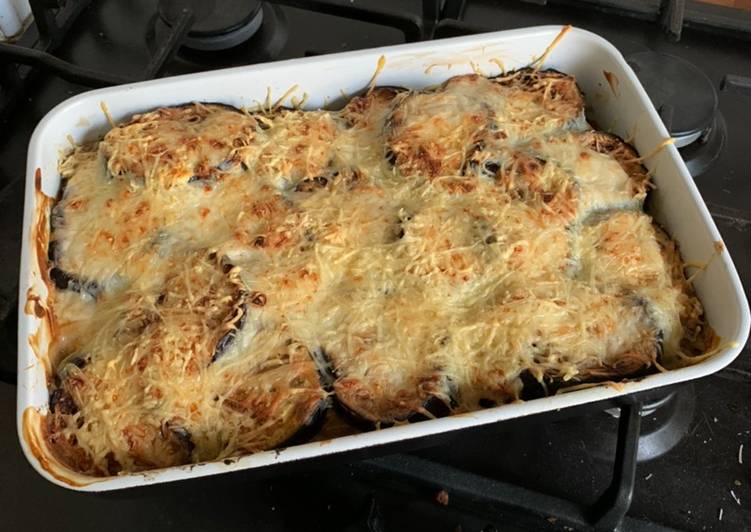
- Verser la sauce béchamel sur les aubergines puis le fromage râpé..
- Préchauffer le four à 180 degrés. Une fois le four chaud, mettre le plat au four à 180 pendant 10 minutes puis baisser à 150 pendant 20 minutes. Passer ensuite au grill pour gratiner le fromage 5 minutes..
Topping the meat is either a rich bechamel sauce- a French influence that was introduced later-or, as in today's Moussaka recipe, a cheese-based topping. The variations in moussaka recipes go beyond the. Although moussaka is a dish most associated with Greece, it is in fact well known in many other countries in the Middle East, each having its own version of this hearty and filling casserole. Classic moussaka is made by layering potatoes, eggplants, and a meaty lamb sauce, and then covering the dish in an egg-enriched béchamel sauce that crisps up and becomes golden brown in the oven. Greek moussaka (mousaka) is one of the most popular dishes in Greece, served in almost every tavern and prepared in every household on special occasions and big family meals and for good reason!